- The Rising of the Phoenix
- Posts
- May 21 Newsletter


QUICK TIP: Soil is the foundation. Feed the soil and let the soil nurture the plants.
Building Living Soil
Building and nurturing a resilient and sustainable food system is not complicated when you let nature take the lead. It only looks complicated and difficult when you break down the process into its tiny little parts.
The bottom line is: A secure food system happens when resources are cycling. And that starts with living soil.
When you view your soil from the classical energetic framework, living soil contains all 4 elements.
EARTH is the ground up rock and mineral content in the soil.
AIR all living soil breaths and the spaces between the particles allow the air to move in and out of the soil structure.
WATER is life, it clings to the particles and flows through the soil and the life. It is the blood of the soil, carrying nutrients and energy.
FIRE is the life, it is the spark that creates abundance.
And all of this has to be in balance with what is growing whether it is intentional or not. A living soil that creates abundant life continuously cycles these elements. It is our job to nurture that cycle.
Yes, to create and nurture living soil, you have to start with some basic structural elements. I look for a soil that is about 50% organic matter and 50% mineral matter. That mineral matter for most gardens should be about 20% clay, 40% silt, 40% Sand. The organic matter I add over time. Most gardens need a neutral soil, i.e. a pH around 7, and with balanced nutrients. I cover all of this in the workshop at Delectable Tiny Gardens.
Once you have your structural elements in hand, it is time to mimic the natural living soil process for the type of the garden you are creating. In general, the environmental progression starts with disturbed soil. Then it evolves into grassland, then to forest. Most gardens are kept at the “disturbed” stage. So, I am going t talk about this garden.
Your vegetable garden starts when you disturb the environment in some way. You might till the soil, or kill back the growth that is already there. Because it is frankly quite difficult to grow cabbage and tomatoes in a lawn.
1) So, to get started, destroy what is there by turning it over or covering it and smothering it.
2) Next, add living soil, compost, worms, and other living soil components.
3) Now leave the soil structure intact and only disturb the surface just enough to create a planting surface.
4) Add animal byproducts in the form of rabbit, chicken, or other manure that has been composted. Or worm compost.
5) Always work for diversity in your plants. This takes advantage of differing root structures, nutrient needs, and pest pressures.
6) For most gardens, mulch deeply with a nutrient rich mulch.
7) Let the life in the soil do the rest.
To see how all this comes together, join us at Delectable Tiny Gardens, the meeting place designed to support your food resiliency in Tiny Space
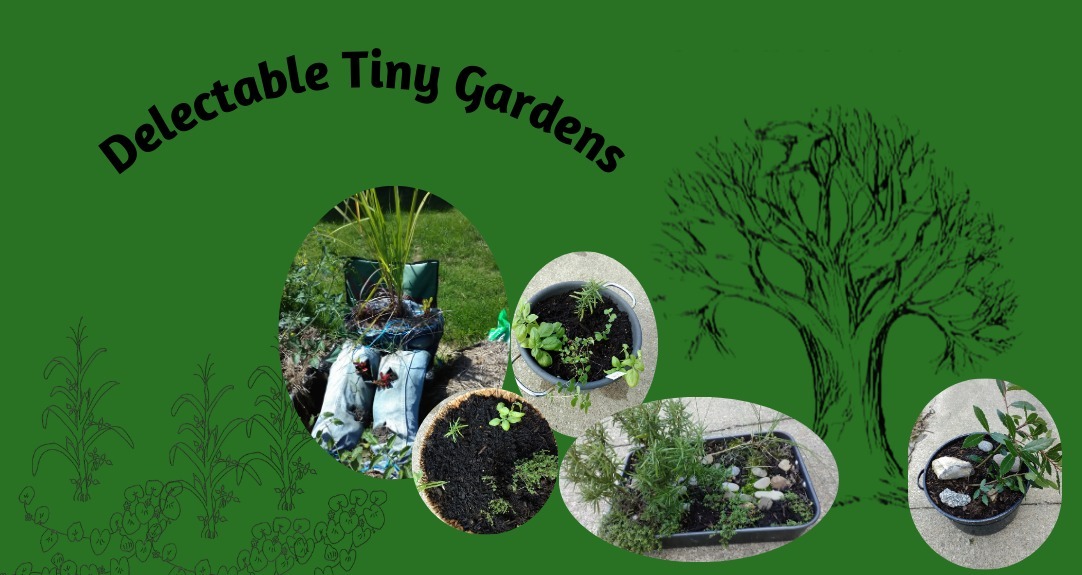
Or check out the Delectable Tiny Gardens YouTube channel at:

Here Is The Solar Information For 41 * 6’ Latitude
Date Hours of Sunlight Elevation
Jan 1 9h 14m 25.7
Feb 1 10h 5m 31.6
March 1 11h 17 m 41.1
April 1 12h 43m 53.3
May 1 14h 2m 63.7
June 1 15h 70.6
July 1 15h 8m 71.5
Aug 1 14h 22m 65.9
Sept 1 13h 6m 56.4
Oct 1 11h 44m 44.9
Nov 1 10h 22m 33.7
Dec 1 9h 23m 26.5
We are in sacred link with the environment we inhabit. It is a symbiosis that creates a healthy environment.
You are invited to join a community formed to support people on their journey towards food resiliency in Tiny Spaces, Delectable Tiny Gardens.
Virtual gathering on Friday and Sunday, Plant Profiles, Workshops, Tools and Information, Shared Expertise and Experiences.
For Plant Profiles, Resiliency Guides, and to book coaching
